ARTEX: FBI warns of AI-powered automated attacks

Published on , updated on · 3 min read
In this article
Key takeaways
- ARTEX agents stole credentials and tried to bypass KYC checks with deepfakes.
- The FBI links ARTEX to a ConnectWise compromise that affected Microsoft 365 customer environments.
- In three days, Cloudflare saw more than 50 framework families scanning its customers; daily requests have increased 30-fold since October 1.
- Amazon attributes the campaigns to ARTEX with moderate confidence; honeypot data doesn’t confirm the impact of every operation.
AI agents powered by ARTEX carried out offensive campaigns with little human involvement. Credential theft, real-time deepfakes to bypass KYC checks, a ConnectWise compromise that affected Microsoft 365 customer environments: the FBI has plenty to get our attention. Not exactly the kind of automation we want to see spreading!
ARTEX strings tasks together
ARTEX is an open-source, agent-powered penetration testing framework. In plain English, it coordinates reconnaissance and exploitation steps, and can connect to existing security tools, including through MCP. Operators give it goals and constraints in persistent instructions. The agents can then identify targets or check exposed credentials.

Amazon Threat Intelligence uses MadPot, a network of decoy services that logs attackers’ requests. Between October 3 and November 5, 2026, ARTEX agents sent these sensors requests containing traces of their own campaigns. Amazon assessed activity that potentially targeted some AWS customers and notified them when necessary. The company couldn’t confirm the attacks against other organizations.
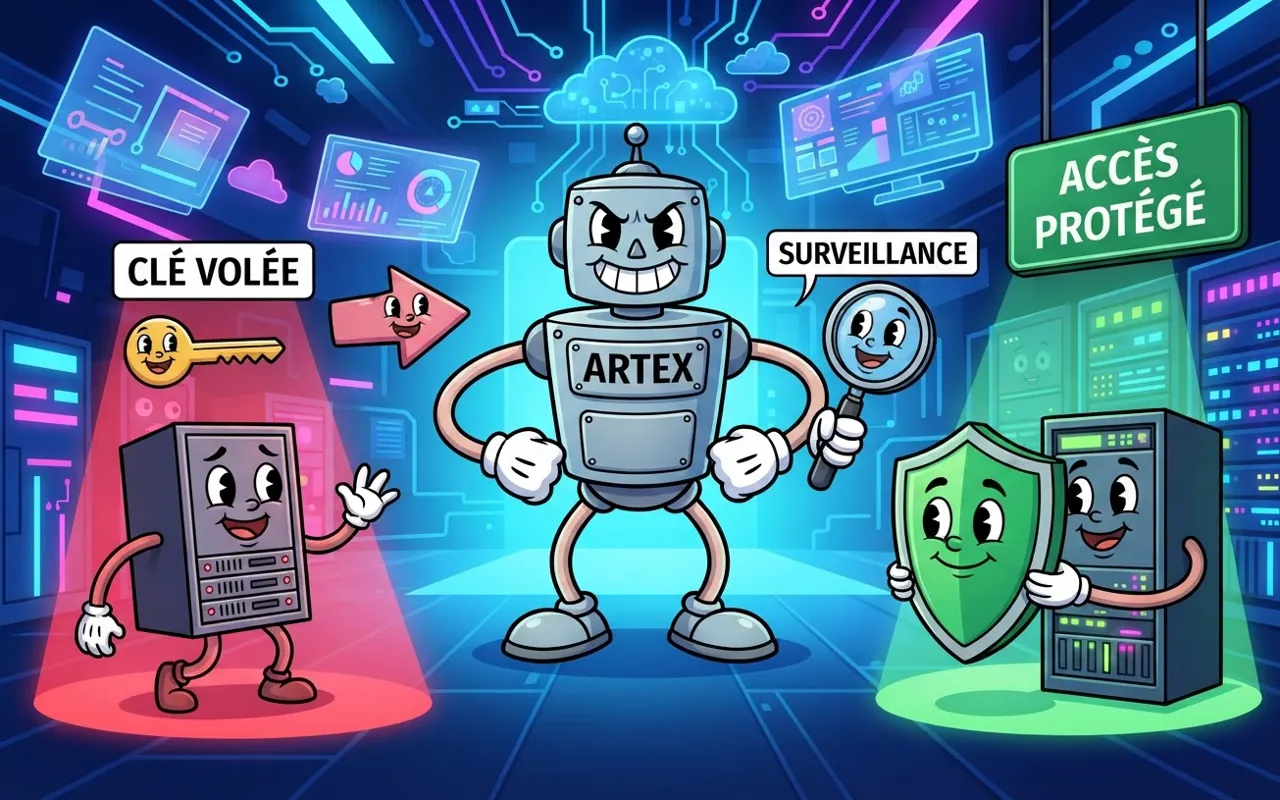
In the campaign described by Amazon, the stolen keys were used to pay for access to AI models used to keep searching for credentials. Another operation targeted cryptocurrency exchanges’ KYC checks, using real-time deepfake injection. So we’re talking about campaigns with distinct objectives, not just a technical demo.
Frameworks are spreading fast
Cloudflare reports a sharp rise in penetration testing and orchestration tools built on large language models. In three days, its systems saw more than 50 framework families trying to scan its customers. The IP addresses associated with these tools number in the thousands, and the daily volume of requests targeting AI-powered pentesting and exploitation tools has reportedly increased 30-fold since October 1.

ARTEX’s creator took it down on October 8 and condemned its malicious use. But forks, copies derived from the project, and similar frameworks have multiplied. Cloudflare cites more than 12,000 repositories, including several hundred forks of the original repository. Taking down the original project didn’t stop its descendants.
For security teams, that changes the scale of what needs monitoring. Agents can map environments, test access, and chain actions together at scale. Cloudflare also reports the use of stolen customer credentials to move laterally, in other words, from one system to another. So it’s better to monitor behavior and access, not just look for the name of a known tool.
My take: start with access
Cloudflare recommends rate-limiting rules in the WAF, anomaly detection on web applications, bot protection, identity checks for sensitive applications, strict schema validation, and threat intelligence. The goal: spot automated requests, limit access to exposed applications, and reduce opportunities for abuse.
We need to keep a cool head when it comes to attribution. Amazon links the campaigns to ARTEX with moderate confidence, based on references to the tool and technical indicators. Attribution to China-linked groups is also assessed with moderate confidence. Honeypot data sheds light on the methods and intentions recorded by the agents, but doesn’t confirm the impact of every operation on the organizations targeted.
To me, the signal worth taking seriously is the ability to chain offensive tasks together with little supervision. The original repository is gone, but forks and comparable tools are already circulating... I’d start by checking exposed access, identity controls for sensitive applications, and detection of automated behavior. And above all, by reducing what a stolen credential can reach. That’s already plenty of concrete work.