
Kiri: Your Containers Without Docker Desktop, Really That Much Faster?

Published on · 3 min read
In this article
Key takeaways
- Kiri is a Rust runtime compatible with the Docker Engine API, Compose, and buildx.
- On macOS and Windows, Kiri uses a Linux VM; on Linux, it can use the kernel directly.
- The project claims a 2.5 ms startup and a 0.15-second wake-up, with no independent benchmark.
- As of November 18, 2026, the repo has 190 open issues. Its maturity remains to be seen.
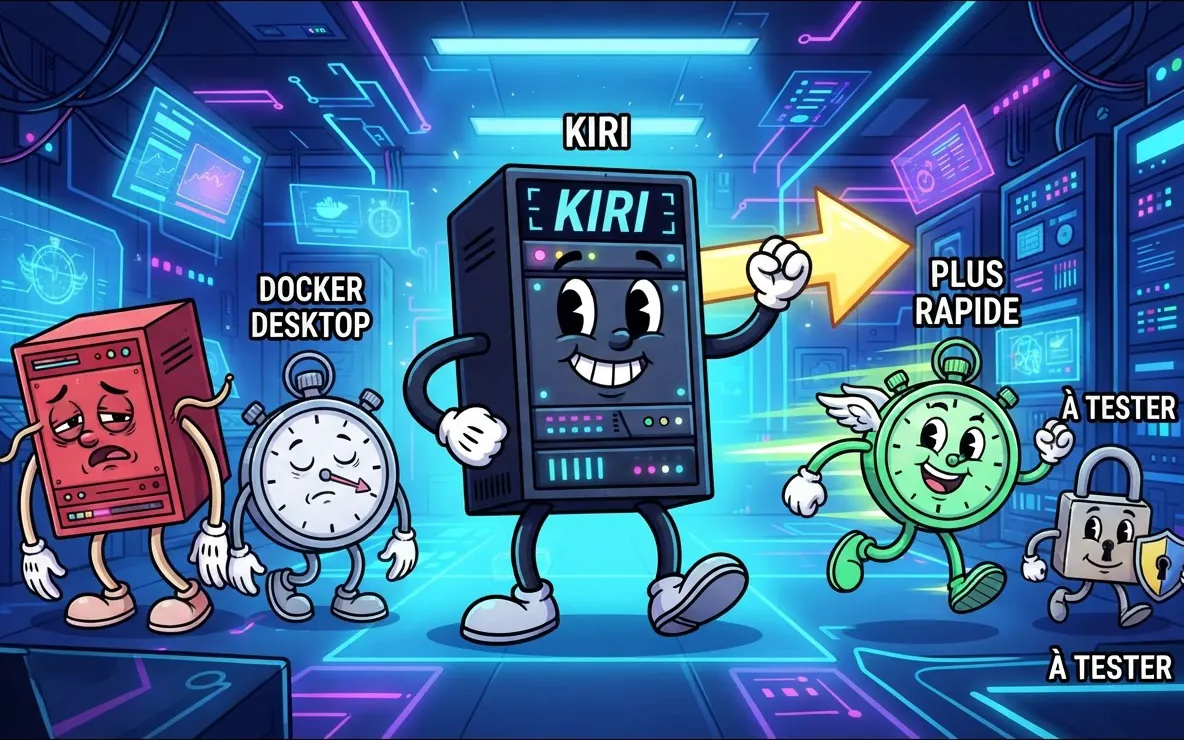
You open Docker Desktop to launch a container, then wait for the machine to wake up. Kiri wants to save you that little ritual, with a runtime written in Rust that runs your Docker images on macOS, Windows, and Linux.
Docker, but with the commands you already know
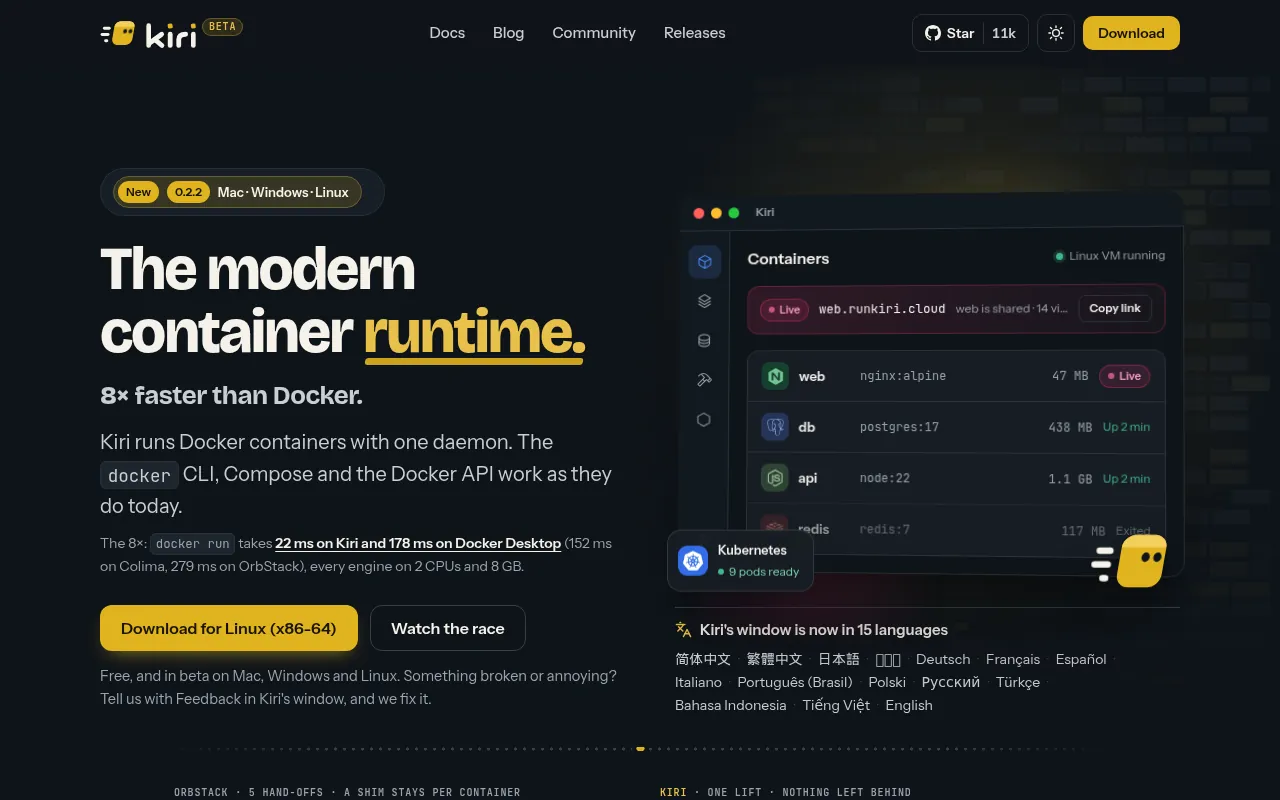
Kiri targets Docker Desktop and OrbStack users. It speaks the Docker Engine API, the interface that lets Docker CLI and other tools manage containers. Compose and buildx are also said to be compatible. So you can keep using your commands, at least in theory: the README doesn’t detail possible differences in behavior.
 See the source of the image (opens in a new tab)
On macOS and Windows, Kiri runs containers in a small Linux virtual machine. On Linux, it can use the kernel directly, without going through that VM.
Milliseconds that make you want to try it
The README claims startup in about 2.5 ms via the Docker API, around 80 times faster than Docker Desktop. It also describes a VM that goes to sleep after 60 seconds of inactivity, a daemon of about 15 MB, and a wake-up time of 0.15 seconds. Tempting enough to get out the stopwatch... except these figures come from the project, not an independent benchmark.
Kiri adds local domains under .kiri.local, with HTTPS provided by its own certificate authority. The README also mentions a Kubernetes cluster you can start with one command and Linux machines. The options, limitations, and supported platforms aren’t specified here. Best to check before making it part of your development environment.
Stars, and already 190 issues
The libracoder/kiri repo on GitHub (opens in a new tab) was created on November 2, 2026, and got a commit on November 18. As of November 18, 2026, it has 10,590 stars, 475 forks, and 190 open issues. The owner is a user, the code is written in Rust, and the listed license is Apache-2.0.
Fifteen days old and already getting this much attention? Impressive. But stars don’t guarantee stability or quality, and those 190 open issues are worth a look before adopting the project.
My take: one to watch
To try it out, head to the Kiri site (opens in a new tab) or its repo, then read the installation instructions before running anything. The sources provided don’t include a command to copy and paste here. Check the license and test in a disposable environment, with data that doesn’t matter. If you’re comparing options for working with AWS locally, this article on AWS Emulator covers another part of the same problem.
In my view, Kiri is worth trying locally if Docker Desktop gets on your nerves and you like keeping an eye on young projects. I wouldn’t trust it with an important workflow just on the strength of its stars: the README claims impressive performance, without giving the details needed to judge how far those claims go ^^.
Follow Metanaps
Sources
- libracoder/kiri github.com
On the same topic
-
-

-
Cloud security
ARTEX: FBI warns of AI-powered automated attacks